Friday, January 25, 2013

My Grandmother's Hands and Psalm 90


We are in her house in Dallas.  Sesame Street plays on the television I am supposed to be watching.  But instead, I watch her, specifically her hands.  She grips her new, clean easel, finagling its three legs in different positions until it stands independently.  She extends her arms, pinching her thumbs and middle fingers on the top corners of a recently gesso-ed and pencil-detailed canvas, lifting and setting it down gently to rest on the easel. Her soft, peachy hands reach into an off-white fabric and brown leather-lined painter's bag resting on a table next to her and pull out 1 larger and 1 smaller plastic paint tube.  She sets the smaller one down, carefully unscrews the larger one and gently squeezes about a tablespoon of its bright white contents a bit off-center on , what at the time seems, an oddly shaped, somewhat rounded wood plate.  She screws the top back on, puts it down, picks up the smaller tube, unscrews it and applies even more controlled pressure to the tube, causing a smaller teaspoon size deep cobalt-colored mound to ooze out.  She screws the top back on and puts it back down. Next, she reaches into the bag for her brushes, lots of them, different shapes and sizes that she gathers up in one hand and places vertically on a table, releasing as if they were pick-up sticks to fall and spread haphazardly on the table's surface.  The bristles are clean, but the handles are splattered with layers and layers of her past paintings - blues in pastel shades are most noticeable, but there is a speck of white here, a smear of pink or red there.  And when ready, she selects a brush, dips it into the smaller splotch on her palate and pulls the now bristle-blue bulb toward the center where it meets the dollop of bright white.  She mixes the two colors together, blending them until they are no longer deep sky and ice, but instead a perfect Caribbean Sea. 

We are in a quiet hospital room, and my grandmother is unconscious, peaceful, and dying. She lives for two days like this after I arrive. Neither my mother nor I leave the hospital these oddly endless, urgent, blurry forty-eight hours.  We spend the time in a quiet rhythm: me sleeping while my mother keeps watch and then the reverse.   Most of my awake time is spent holding and looking at my grandmother's hands. 

One of My Grandmother's Paintings
My grandmother was a creator: a painter, a sculptor, a decorator, a seamstress, a pianist, a cook, and the list goes on.  Over the past year and half since she died, countless reminiscences play like old-style home movies with no sound reel in my mind's eye, sometimes because I turn them on myself and sometimes because they seem to have a will of their own. In them, I see my grandmother painting, sculpting, playing piano, cooking, sewing, often looking up to smile, laugh, or say something that I cannot hear.  But inevitably, the focus zooms in on her hands: how they moved, what her nails looked like, the length of her fingers, the shape of her knuckles, the pale tone of her skin.  And then, as if in time-lapse projection, the film clips capture advance to show memories of more recent times, and I watch her hands change.  The once taut skin loosens, revealing deepening wrinkles and more pronounced veins.  Her arthritis becomes more and more challenging and as such, her knuckles appear larger.  A broken wrist changes the angle at which her hand rests when flat on a table.  And then I flash to those final moments, sitting at her bedside, holding her hand, her still soft and smooth and strangely strong and beautiful hand.

I have always been moved by Psalm 90, its honesty, its intentionality, its yearning, its hope.  In acknowledging the limits of life and the struggles we all experience, the Psalm asks the Divine to teach us mindfulness, perspective and compassion.  The Psalm concludes that we find purpose in life when we can recognize the Holy, the Divine around us. And ultimately, life extends beyond the finite bounds of days and years  when our lives and legacies are remembered and lived out in those who live on after us. The Psalmist expresses this idea so beautifully in the last verse:  "Establish the work of our hands that it may long endure."[i]

My son loved my grandmother, his great-grandmother.  He inherited much of her creativity and talent, demonstrating a real artistic gift very early on in his life.  Now, at the age of five and a half, if there is down-time, he spends it creating: sculptures, drawings, and most often paintings.

We are in our home in Deerfield.  The water is pouring over the dishes I am supposed to be washing, but instead, I am watching him.  He is determined to create something "really special, like Nani used to do" he says.  He reaches into his plastic art supply box to set up the palette, acrylic paints, "fancy" brushes, and canvas he received for his birthday.  Then, he reaches along-side a book shelf, in the space between the shelf and the wall.  It takes a little coaxing to set up since it hasn't been opened in many years, squeaking and creaking as he pulls each leg out so it can stand balanced.  The top is still very clean, but the ridge along which the canvas rests is covered in paint. Layers and layers of paint - blues in pastel shades are most noticeable, but there is a speck of white here, a smear of pink or red there.  It is like a yet-to-be excavated site of the countless layers of works of art my grandmother painted on canvases that rested on this same easel.  My son places his blank canvas on my grandmother's easel, selects a brush, dips it into a deep shade of blue, pulling up a substantial glob. And then what I see and my son does not is that as he lifts his brush to the canvas and begins to paint, a drop of azure from his brush falls to the bottom of the canvas and drips onto the ridge, adding his own layer, his own imprint, onto the foundations of history and story and love that sit beneath.

May Your Work be visible to Your servants, and Your Glory to their children. And let the beauty of the Divine be upon us; establish the work of our hands that it may long endure. Psalm 90:15-16


[i] A modified translation as suggested by the Reform Rabbis manual.  

Saturday, December 29, 2012

Why I Am a Jewish None (or a None-ish Jew) and Why You Should Care


(This is an adapted version of the sermon I delivered on Friday evening, December 28, 2012 at NSCI)


I’d like to share a recent self- revelation: deep down inside, my soul is the soul of a None.  No, I didn't spell that wrong. I’m not referring to a Catholic nun of course!  Let me explain. A "None" is the name given to a “member” of the fastest growing religious group in our country - a seemingly new religious denomination named by the Pew Forum and other religion demographers as those who will not identify with any singular religious grouping, category or denomination.  The Nones have grown from 15% to 20% of the US population in the last 5 years alone, and they’re projected to increase even more over the next decade. 

It seems like a pretty sad indicator for the face of organized religion at first. But don't get too distressed.  Here's something interesting: Although atheists and agnostics are included in the "Nones" category, their specific populations have remained a steady, flat 6% for a quite a while now.  So who are the other now 14% of our population of those not identifying in one singular religious category but yet not atheist or agnostic, and why on earth would I consider myself to be like them?

Well, 37% of them say they are spiritual.  Check.  68 % of these Nones say they believe in God. Check.  58 % say they have a deep connection with nature and earth. Check.  1 in 5 say they pray daily. Check.[i]  The Nones are searchers, seekers, boundary pressers and question askers, souls unwilling and uninterested in tightly reinforced definitions and denominations. They may very well have deep spiritual encounters in a prayer service, but they will also have them in their yoga class, or walking in the Botanic Gardens. Or listening to stirring music or reading a powerful book.  Check, Check.  They view themselves as open vessels for the meaningful and the sacred in all experiences.  Check.  In many ways, they sound like they'd make great Jews!

What are the true defining characteristics of Jews anyway?  Outside of not believing in more than one God, what other consistent indicator or unifier is there - in origin, in practice, in ethnicity, in language, in sexuality or in family structure?  Jew by birth, Jew by choice, Jew by matrilineal or patrilineal descent? Jew by synagogue membership or not?  Jew by how many days a year or lifetime they attend services? None of these offer a real limitation on what being Jewish means, only what Judaism can mean to a given individual in a given situation.

After all, who among us fits perfectly in the category of any label?  We are by nature complex, amalgams of identities, experiences, histories, practices and beliefs that don't generally fit a cookie cutter definition or picture.  And that, if you asked me, is a pretty wonderful thing – these combinations keep us interesting, diverse, learning and evolving!  If being a None equates to a rejection of black and white, absolutist religion then the real question should be, who among us isn’t a None?

So what at first seems like a pretty ominous report of eventual religious demise instead turns out, I would suggest, to indicate an evolution in the openness  of what faith based and religious communities, including Jewish ones, will someday become, if they aren't already on their way.

Here's the snag:  Many Jewish organizations and Jewish population study publishers have a problem with what I just said.  They want to perpetuate the emotional response from what seems to have become Judaism's historical meta-narrative:  Someone, somewhere is trying to put an end to Judaism by steering us away from our long-held, steady and implied "proper" roots and traditions.  Maybe it is an external demise that's predicted, maybe it’s an internal one, as the latest Chicago and New York Jewish population studies seems to suggest about all forms of non-Orthodox Judaism.   We've gone astray from our tradition - strangers to our faith and the so-called "right" way to practice it.  Failures of perpetuating what our ancestors throughout the ages fought and died for.  And the truth is, these erosion narratives have long worked as catalysts for community solidarity and fundraising.  It is one of the main myths at play when non-Orthodox Jews make financial contributions to organizations like Chabad instead of their own non-Orthodox synagogues or organizations with which they are affiliated – almost as an apologetic and acknowledgement in a sense of their self-perception as somehow a lesser or failed Jew. 

But if the only justification for practicing Judaism, for identifying as “Jewish” is to react against this so-called erosion, then how can it ever be possible to really flourish?  Survival mode never yields much other than stasis at best, and at worst, ironically, it causes the very same erosion it was created to fight against.  I think that is what we are seeing now in the non-Orthodox world, and maybe even the Orthodox world too.  The reality of most Jewish institutions 
for the last 6-7 decades has been one of survivalist mentality.  It’s as if we, at some point, forgot that at its heart, Judaism has always, always been about a relationship between the evolving mundane and ineffable qualities of life, with Jewish traditions and laws not designed for stagnation, to serve solely as anchors of vessels never intended to take to sea, but more as wide, billowing sails, enabling us to traverse and discover more of the endlessly revealing cosmos of which we are an integral, covenantal, evolving part.  Solely surviving inhibits and prohibits thriving.

One key reason the Nones are important is because they are not interested in just surviving, erosion, in anchored vessels that can’t sail; they are wholly invested in yearning, in seeking, in thriving.  They seek deep rooted answers to the significant questions of existence and meaning in the universe.  Their yearnings, I believe, are not unique, but are actually shared by every human being. It’s just that not everyone is comfortable or willing to articulate them in a so-called religious or Jewish context because we, as Jewish institutions, have failed to foster an environment where such questions are the norm.  But these questions are ultimately what we find at the heart of life.

Our desires to know and deepen our understanding of ourselves, our place in the world, what we are here to do, ultimately our search for Truth – with a capital T – the asking of and searching for answers to these questions, I’d say prove the very purpose for which God created us in the first place.  And that search is necessarily about wrestling and digging.  The goal is not reaching “a single, eternal realization,” as Rabbi Irwin Kula teaches,  but instead “living out the process of realizing again and again.”[ii] 


Our Jewish teachings are at once plentiful and varied, ripe and evolving, rooted and ethereal.  Ours is a wisdom tradition intended to be lived, wrestled with, imagined, “deconstructed, and re-imagined.”[iii]   We must not be afraid to do just this – to activate and enliven our own yearnings and souls’ quests in this light.  Not to do so surely resigns us to a life of malaise and stagnation.  And that’s not just a modern psychological statement.  Jewish mystics have been talking about it for centuries, originating in Jewish folklore about the Golem of all places, with poignant teachings about the Hebrew word for Truth:  Emet.  Rabbi Kula puts an interesting twist on it. He teaches: If you remove the first letter from Emet, you are left with a different word: “met” – which in Hebrew means death.  As such, the mystics taught that if you only have one side of the story which you believe is absolute truth – with a capital T, you've essentially begun your own demise.  Truth, they inherently understood from a most profound level, has always been more complicated, nuanced, evolving than that. When viewed all together, Emet – aleph, mem, tav - is comprised of the first, middle, and last letters of the Hebrew alphabet – as if to suggest that the very composition of the word Truth itself urges us to seek a wider, more inclusive, deeply resonating, and all-encompassing truth.[iv]

Indeed, this call to seek a wider, more inclusive, deeply resonating and all-encompassing Judaism, I believe, is the call to all of us at this precise moment in our evolution as a faith. 
So I’m a Jewish None, and maybe you are too. And maybe we’re all better for that.


[i] http://www.pewforum.org/Unaffiliated/nones-on-the-rise.aspx
[ii] From the teachings and language of Rabbi Irwin Kula in “Yearnings” p.4.
[iii] Ibid.
[iv] These teachings on Emet are sourced to any number of places, both ancient and modern.  The play on Emet and Met is a reference to any number of Golem narratives.  See Sefer Yitzirah as an example.  The concept of Emet as comprised of the first, middle, and last letters of the alphabet I first heard mentioned in rabbinical school and have since heard and read mentioned many times, however I do not know the original source of it.  Irwin Kula offers a fitting description of these stories, and it is from his conceptions of the stories that this sermon derives its meaning.

Sunday, December 16, 2012

The "Fathomability" of Gun Violence against Children - Remembering Noah Pozner and Aliyah Shell

Like most everyone I know, I am having a really hard time coping with the horrific murders in Connecticut. Since I have young children myself, I keep having these nightmarish visions placing our family there, me waiting at the fire station and my child never returning to me. I see the sweet face of 6 year old Noah Pozner, the youngest murdered victim, and in my mind, his face morphs into the face of my own 5 year old son. He could, after all, have been my son, that young Jewish boy attending elementary school in a "good, safe, suburban school." The nightmare plays over and over again in my head, until I shut it down. Something I, as someone whose child was not actually there, have the luxury of doing. Truth be told, I have absolutely no clue how anyone in that community, especially those whose children or family members were murdered, will ever find any peace. It is beyond fathomable.

"Unfathomable" has, far and away, proved the most common descriptor appearing on the boiling feeds of my Facebook and Twitter accounts since Friday's tragedy. And on every emotional level I know, "unfathomable" seems a fitting descriptor of the cold-blooded mass murder of innocent children and teachers in an elementary school; it goes against the most basic core values and code of social order and decency we have. But the heartbreaking thing is, this event was not "unfathomable." It is certainly "fathomable" - it has been fathomable for a long time now. People have been heartlessly and carelessly or calculatedly murdering or injuring children through gun violence for a long time now.

I vividly remember first hearing about the school shooting in Columbine on April 20, 1999. Sitting in the lunch room of my rabbinical school in Cincinnati, we all sat stunned and declared the shootings "unfathomable." Until one of my professors called our attention to the fact that children were being shot and killed all the time; the difference being that Columbine symbolized the expanded reach of gun violence into middle/upper class white America. He called us out on our own selectivity in personal identification with a certain type of event and victim over another, and challenged us to see the Columbine murder victims as part of a longer series of American tragedies and travesties with a much more expansive trail of murdered and wounded children strewn in its current's wake. One that demanded multi-faceted government, educational, health, social, spiritual, and psychological engagement and action.

In 2011, 700 children were hit by gunfire in Chicago and 66 of them died. There is ongoing mass murder in Chicago's gang-ridden neighborhoods to which most of us living in safer, suburban neighborhoods have closed our eyes or ignored. On Friday, speaking about the victims of the Newtown attack, President Obama stated, "They had their entire lives ahead of them -- birthdays, graduations, weddings, kids of their own." And this is true. It is what makes the murder of children in particular so horrific. But I wonder why the same is not being said too of those children struck down by gun violence in the city of Chicago (or elsewhere). I think about Aliyah Shell, the 6 year old girl murdered by gang crossfire while sitting on her mother's lap, on the porch of their Little Village home earlier this year. "Birthdays, graduations, weddings, kids of her own" were Aliyah and her family's right, but the same cry was not made nationally when she was murdered, or any of the other of the hundreds of children like her. It is as if we have somehow, as a nation, accepted that for children like Aliyah, such future promise should not be assumed; and that is simply unacceptable. Because birthdays, graduations, weddings, and children should be part of the promise to any and every child. And that future has been stolen from all those slain in the wake of gun violence: black or white, wealthy or poor, shot down in their house or walking on the street, lying down to sleep or waking up, sitting on their front porch or at their desk in their classroom.

Many will take issue with me here.  They will say that linking the Chicago youth murdered to the Newtown tragedy somehow diminishes one or the other.  They will say this is a time of mourning, not of speaking and acting.  They will claim that these are two different problems, one impacting one way and the other a different way. That a school shooting is, by its nature, different than gang related gun violence. On all counts, I disagree. It is indeed a time of mourning, a deepening mourning given these most recent, horrible events.  But one and the other are both inextricably intermingled in what can only be called a community and system-wide web of failure. And that failure isn't rooted in one cause over another. It is immensely complex; it is about gun control and mental health and gang prevention/education and security and anger-management and race and wealth and class and early intervention and public health and, and, and....

If not now, when?  Genesis/Breishit teaches that all humans are created in the image of the Divine, and in the Mishnah, we learn that each life is an entire world. When one destroys a life, they destroy the world. When one saves a life, they save the world. The matter is more urgent now than ever.  So I will not allow myself the anesthetizing ease of time or distraction. And to my own nightmares, I will be mindful to add the face of Aliyah along with the face of Noah. I hope remembering both of these children will remind me of the totality of the real task at hand, and as such, strengthen my personal resolve to be an individual who actively works to create and catalyze change across our communities, within and without, in the areas in which I have a voice and impact. May it be so for each and every one of us who has not yet been caught in the cross-fire directly.

My prayer is that perhaps this most recent horror in Connecticut will be the spark that ignites a system-wide change across all channels, so that the flow of all the murdered souls, whose lives have been cut short too soon, might finally be checked.


Things you can do to start to make a difference now:

Get educated around legislation for safer gun laws/regulation and advocate on its behalf:
http://action.rac.org/p/dia/action/public/?action_KEY=5252
http://www.passthebill.us/PTB/Home.html
http://signon.org/sign/today-is-the-day-for-1.fb23?source=s.fb&r_by=254810

Get informed about improving mental health awareness and treatment and advocate on its behalf:
http://thebluereview.org/i-am-adam-lanzas-mother/
http://www.nami.org/gtsTemplate09.cfm?Section=Grading_the_States_2009

Support organizations that are already working to make a difference:
www.bradycampaign.org
http://www.huffingtonpost.com/2012/12/14/connecticut-elementary-school-shooting-how-to-help_n_2302760.html
http://www.imagineenglewoodif.org/


Feel free to use the comments space below to add your own ideas about how to make a difference.


Friday, November 30, 2012

The Wholeness of Being Broken: My Brief Thoughts on Vayishlach


Avraham may have been the first Jew, but Yaakov is the first person to merit the name Yisrael.  This week offers one of of my very favorite Torah portions: Vayishlach.  It is the concluding parasha to the Yaakov and Esav narrative that began three weeks ago, when the twin brothers were conceived and born.  Primed in the womb for strife and conflict, emerging into the world  hand gripped tightly around his brother's heel, he is given the name Yaakov  (a direct link to the Hebrew word for heel: akev.)  Yaakov  - a soul defined by circumstance and experience, lives out much of his young life reacting to the reality that someone or something else has defined for him.  And after questionable birthright sales and maternally manipulated identity theft, Yaakov spends the next part of his life on the run, but not without an odd night vision of ladders and messengers and heights and depths.  Here, he walks away blessed, but nevertheless, bargaining, struggling, loving and learning, about living and choosing and doing on his own terms.  And only after this can he heal wounds ruptured two decades before, but not before an eerie night's encounter with another. When Yaakov, the one who entered the world hand gripped to foot now holds on so tightly, despite injury,  to his adversary/counterpart/self,  he earns a blessing, a new name: Yisrael.  No longer defined by his circumstance, transformed, this man becomes Yisrael - one who wrestles with the Divine.  Ultimately, Yaakov claims his own destiny on his own terms, without the manipulation of anyone else; it is when Yaakov becomes Yisrael that he truly becomes our forefather. With this new name and new purpose, one brother sees the other; with this new name and new purpose,  the brothers embrace and forgive; with this new name and new purpose, the man who was Yaakov becomes Yisrael, and only then is called shaleim - whole.
Wholeness comes with brokenness.  Holiness comes not in the victory, but in the wrestling, the struggling, the steps along the way.  


Friday, November 16, 2012

The Conflict in Gaza and Israel in 140 Characters or Less? or TheLessons We Can Learn from Berurya and Rabbi Meir

Last night on Twitter, Huffington Post's Religion section asked what people thought about the following post by a @HuffPostReligion follower: "At the heart of all this hate in the Arab-Israeli conflict is religion".  I responded, "Thinking the "heart" of this terribly complicated situation can be explained in 140 chrctrs or less = insult 2 all sides." 
They invited me to offer a larger comment.  Here it is:

I know 2 things for sure.  
1.  Not one of us knows the real, 100% truth of why this horrible violence has broken out between Israel and Gaza.  
2. Offering single word or sentence explanations that assert or place unilateral blame or causality is not only a waste of energy and time, but ultimately only fuels the vitriolic and vengeful fires burning  in the hearts and minds of so many, ultimately moving everyone away from any peace.    

There is absolutely no way to explain a single, simple cause for  this deep, immensely complicated and painful conflict and web of conflicts  in 140 characters or less on Twitter.  Or Facebook.  Or in a You Tube video.  Or a colorful graph or catchy graphic equating rockets raining in Israel to what that would be like in New York City.  Or posting up pictures of victims of violence and war as a means of somehow justifying one side or the other.   

I believe firmly in the right of Israel, like any sovereign nation, to defend itself against violence towards its people.  My heart aches for Israel and Israelis hunkered down in bomb shelters, not knowing when a rocket may be fired or where it may land.  And yet, my heart also aches for Palestinian people hunkered down in their own homes.  A child killed by a rocket or missile's blast in Gaza is no different than a child killed by a rocket or missile's blast in Israel.  The wails of their fathers and mothers reach the same octave heights and depths, and the composition of their tears is identical.  And I'll tell you something: the conversation about who started it will provide no solace to the families of the victims on either side.   The fantasy that long-term solace might be found in blood-revenge only proves a long-standing myth when your loved-one remains dead.  

A couple months back, I re-read a passage in the Talmud from Brachot 10a that has stayed with me over the years.   It details a disagreement between Beruryah and her husband Rav Meir, where Berurya sways his opinion and behavior on a matter of prayer.  I always understood its significance as one of the Talmud giving legitimacy to the opinion and rights of a female voice.  But rereading it at the end of the summer, I decided it is so much more significant than that!

Here is text translated into English in bold with included commentary from the Koren translation unbolded:

There were these hooligans in Rabbi Meir's neighborhood who caused him a great deal of anguish.  Rabbi Meir prayed for God to have mercy on them, that they should die.  Rabbi Meir's wife, Berurya, said to him: What is your thinking? On what basis do you pray for the death of these hooligans? Do you base yourself on the verse as it is written: "Let sins cease from the land? (Psalm 104:35), which you interpret to mean that the world would be better if the wicked were destroyed? Is it written, "sinners"? "Sins" is written. One should pray for an end to their transgressions, not for the demise of the transgressors themselves. Moreover, go to the end of the verse: "and the wicked will be no more." If, as you suggest transgressions shall cease refers to the demise of the evildoers, how is it possible that the wicked will be no more i.e. that they will no longer be evil? Rather, pray for God to have mercy on them, that they should repent, if they repent, then the wicked will be no more as they will have repented. Rabbi Meir saw that Berurya was correct and he prayed for God to have mercy on them, and they repented.

So Berurya teaches her husband a lesson about mercy over vengeance, life over death.  This is significant not because Berurya is a woman, but because of Berurya's back story.  Berurya herself is a survivor of terrible trauma and terror.  Her father, Rabbi Chanina ben Teradion was martyred, along with her entire family over time, and tragically both of her children died in her lifetime as well.  If there were ever a person to justifiably side with vengeance, it would be Berurya.  But instead she invokes mercy, rachamim (as it says in the text), for her voice.  And by intoning the voice of mercy, she changed the action and prayer of her husband, and in doing so, effected peace.  

The voice of rachamim, as difficult and complicated and even painful as it can be, needs to be the loudest sound we intone and hear these very violent days.  Let it drown out the screaming sirens of hate and lies that loom large on the currents of the internet and airwaves.  Neither you nor I will not stop this conflict, but, like Berurya did for her husband, we may change the mind and behavior of  another person from vengeance toward mercy, and who knows what difference that may make for someone else. 

So whatever side, whatever faith:  pray for mercy, pray for peace.  Act in mercy, act in peace.  Speak in mercy and speak in peace. 


Wednesday, November 7, 2012

The Spirituality of Concession and Acceptance Speeches and the Quality of Chesed

I'll admit it: I cried last night when they announced the winner of the Presidential election, and not just tears of joy.   I felt, well, bad for the other candidate, his staff, his voters - all the people who had put their heart and soul into his campaign, only to come away defeated.  I wasn't upset about the fact they lost in terms of the country's future; I was sad because I put myself in their shoes, and imagined how I would feel if I were them. And that made me feel - sad.  Because all potential presidents, political parties, and even PACs have one thing in common: they are all made up of living, breathing, feeling people.

And then I started thinking about what both candidates had been thinking and feeling over the course of the evening.  I've never been behind the scenes in a presidential campaign, but I imagine that the Tuesday evening of Voting Day, between say 7pm and 11pm, proves a challenging time.  What do they do while they wait? Do they put on sweat pants?  Do they meditate on the number 270 or play games with maps of red and blue puzzle pieces that they move in and out in different hypothetical sequences?

I imagine part of their time is spent reviewing and prepping speeches, two in particular, one of which they'll have to deliver just a few hours later.  I wonder what that feels like for each of them, reading aloud statements which force them to imagine life moving forward as both winner and loser when the reality remains undetermined. And, because they never seem to do it in real-time when actually delivering one of those speeches, I wonder if that is when they cry?  Cries of victory and loss, exhaustion and exhilaration, all wrapped up in one, because for that moment, they each live in both the world of winner and loser, and they each get a taste of their contender's future reality and their own, all at once.

In many ways, if that speech rehearsing actually occurs, it might be the most deeply spiritual part of the campaign for the candidates.  The 18th Century master Chasidic teacher Simcha Bunem of Przysucha's famously taught:

"Each person should designate two pockets.  In one should be the verse from Genesis 18:27, "I am dust and ashes." And in the other, the passage from Sanhedrin 37, "For my sake was the world created."  According to need, the person should draw out the message from either pocket."

And the 19th Century Chasidic teacher Yechiel of Alexander expanded on that saying:

"When the Evil Impulse wants to show a person how great he or she is, or of the greatness of his or her acts of achievements..., in order to bring him or her into the power of arrogance and self-centeredness, the person should draw out the scrap that reads, 'I am dust and ashes."  When the Evil Impulse wants to snare a person in the net of sadness and depression and show his or her failures, the person would draw strength from the scrap that reads, "For my sake was the world created."

What more direct translation of this could there be than the possession and rehearsal of both an acceptance and concession speech?

I wonder if the defeated candidate will hold on to the boost he likely felt when he practiced his acceptance speech?   And if the presidential-elect will hold on to the self-diminution he likely experienced while practicing his concession words?  And just how long does that “emotional after-burn” stay with them, their respective parties, staff members, and with us? 

Like me, many of my friends were delighted at last night's election results, however not all of them were.  Last night, a high-schooler at my congregation who I know and respect posted on Facebook how devastated he felt and how worried he was about the country and his own future moving forward.  I am saddened for him and those who feel as he does. We don't see eye to eye politically, but we share our country and its leadership together.  What matters to him matters to me because he is someone about whom I care.  But if the two pocket teaching calls us to humility internally, then how do we reach across the proverbial line in action?

In Netivot Shalom, 20th Century commentator Rabbi Sholom Noach Berzovsky raises up the importance of the quality of chesed, which means something like: kindness, loving-kindness, or mercy.  In it, he posits that each day a person does not engage in chesed , the day is rendered null and void, as if the day never happened. Put more simply, lack of chesed stops progress or even moves us backwards.  If we are to move forward in the life of our country toward restoration and improvement for us all, it cannot begin with put downs and actions that discredit and debase the perceived opposition.  Instead, it must start for us with acting on the attributes of kindness and mercy,  putting ourselves in the place of the other, broadening our view through adding theirs to our own, and starting the bridge-building conversations that have been put on hold for the past year.  If we do reach out in chesed, we will, as Berzovsky teaches, build our world again, anew, together.

Friday, November 2, 2012

Have You Donated Yet?

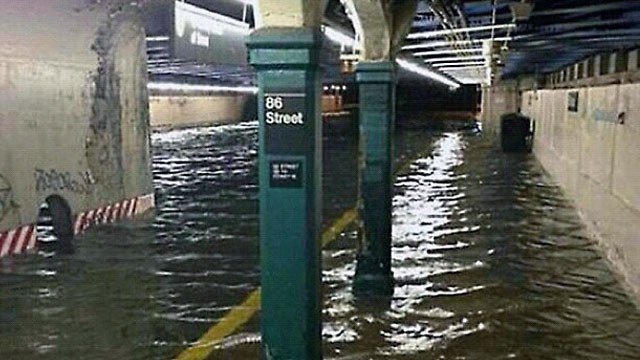
I hear the subways are up and running, albeit on modified schedules, in the New York metro area today - an amazing feat in contrast to the images of them completely submerged in Sandy's turbulent waters just four days ago.  Life goes on, as the saying goes.


But I contrast that with the 65 year old woman from Staten Island whose house literally dissolved to pieces as it was washed away along a reedy-landscape.  As she balances on a path made of 2x4's and pulls through the tangled web of reed-grass and the soaked and now rotting remnants of her pre-Sandy life, I wonder how life will go on for her.


I have nothing wise to contribute to this conversation that hasn't already been said. No insights that offer comfort to those in need.

And while prayers and poems and prose may provide comfort to those of us with access to heat, with our lives and memories still on our home's walls, tucked away safely in closets and drawers, I can't imagine they provide much of anything for those whose lives are literally strewn across landscapes, buried and dissolving in the mucky, toxic ruins of water and mud and ash.

What I know is that each of us who can provide  hands to help must do so.  Each of us who can give money to support the recovery of lives, of homes, of communities, must do so.

Below are a few recommendations.  If you can't decide which to donate to, I would suggest you do as my family did, and contribute to each.  If you would like more recommendations, please message me and I can provide a fuller list.

The American Red Cross
The URJ Disaster Relief Fund
The Jewish Federations of North America Relief Fund
American Jewish World Service (who supports relief work in Haiti - hit first by Sandy - still recovering from the devastating earthquake more than 2 years ago)